

Chair Letter | The Latest | ASA Sponsors | Ads | State Associations Updates
Chair Letter
Hello again,
It has been a busy few months since the last newsletter came out. I would like to start by thanking everyone who contributed to making ASA’s 2026 Conference in Minneapolis a success. We had excellent speakers, enthusiastic attendees and generous vendors without whom we could not have held the event. The members of the ASA Conference Committee worked tirelessly to make the event go as smoothly as possible, largely behind the scenes — they did an amazing job. Thank you all so very much for making our conference a success.
The two initiatives from the Department of Education are proceeding without any signs of changing course. The Reimagining and Improving Student Education (RISE) committee rules were finalized on May 1, and the comment period for the changes proposed by the Accountability in Higher Education and Access through Demand-driven Workforce Pell (AHEAD) committee is complete. The RISE rules change the criteria for what can be considered a professional degree program, and Acupuncture and Herbal Medicine programs were not determined to be included. Several other degree programs as well, including Nurse Practitioners, Social Workers, Architects, and Occupational Therapists, to name just a few, were also excluded. There is already a lawsuit being filed by the Attorney Generals of several states to try and block these new rules, and the ASA is coordinating some very targeted lobbying to get the legislature to block the rule as well.
The AHEAD committee proposed rules are related to an assessment of the costs of education weighted against the first 4 years of income of graduates based on their tax filings with the IRS. Institutions that fail to meet this metric will lose access to public student loans. The comment period for this proposed rule ended on May 20, and I want to thank everyone that was able to submit a comment within our very short window. The Department of Education reduced their standard 60 day period for comments to 30 days for both the RISE and AHEAD proposals, putting additional obstacles in the way of anyone trying to engage in the process.
And, as a final note, there are several ASA committees that could use new volunteers, as could our Board of Directors. If you are interested in serving our profession I invite you to submit an application to our Nominating Committee. Please use the links they provide in their Committee Update section.
Be well.
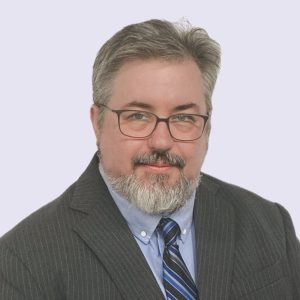
Paul Magee, M.A.O.M., L.Ac.
Chair, ASA Board of Directors
The Latest – What the ASA Committees are doing right now

Conference Committee – Chair, LiMing Tseng
The American Society of Acupuncturists held its 2026 Annual Conference on April 25–26 at the Hyatt Regency Downtown Minneapolis, Minnesota, with the theme of SPRING: Supporting our Practitioners through Research, Integration, Networking, and Growth. Thank you to all who volunteered tirelessly to make this conference possible! The event with 25 speakers drew more than 200 participants from 35 U.S. states and four countries — including Canada, Great Britain, and Australia. Over $8,000 worth of prizes provided by our 30 Exhibitors were awarded to conference attendees. Offering over 30 CEUs and PDAs across a Pre-Conference Webinar Series and the Live In-Person Conference, the program covered a rich range of topics including AI and technology in acupuncture practice, classical Chinese medicine approaches to modern conditions such as long-COVID, panel discussions from acupuncturists from Allina Health–a hospital system that employs 32 acupuncturists, the acupuncture research updates from the NIH’s National Center for Complementary and Integrative Health, and more. Conference photos can be viewed here.
The conference also offered memorable moments beyond the conference hall. Before the event, the ASA Council of State Representatives met for a full day to discuss issues affecting the acupuncture profession. In the later afternoon, local acupuncturists shared our medicine through community outreach by providing complimentary treatments to Hyatt Regency hotel workers. Saturday evening brought attendees together for an Open House at the Penny George Institute of Health and Healing’s Acupuncture Clinic, followed by a festive dinner and live jazz at the MacMillan Community & Education Center at Allina Health. ASA 2026: SPRING was a celebration of our profession’s strength & growth, while sharing the medicine we love.
Federal Advocacy Committee – Chair, Amy Mager
The ASA Federal Advocacy Committee continues to partner with ASA and NCBAHM leadership to strategize forward movement on HR 1667. Medicare FAQs
We are also working with ASA leadership and, under the guidance of the AHM coalition, supporting public comment and advocacy efforts around both the RISE and AHEAD Acts. We continue to advocate for acupuncture to be recognized as a profession.
State Advocacy Committee – Chair, Jennifer Broadwell
The State Advocacy Committee mission is to support all member associations in developing and strengthening their advocacy efforts and developing their individual state advocacy committees.
We manage BillTrack 50, the ASA’s legislative tool that enables our members to monitor all active bills that could impact our practice and helps to research and track influential legislators at the state and federal levels. Every member association has access to this valuable tool.
We create and manage the Advocacy Toolkit for our Members that includes many helpful resources and documents that can aide your state’s advocacy initiatives and organization.
We are seeking to better understand your needs so that we can better serve our members. We are reaching out to our members to learn more about their current needs and experiences. Please reach out if your association is interested in setting up an exploratory meeting.
We are also looking for new members that have experience with advocacy and are willing to work together to support our profession. If you are interested, please complete the committee application on our website.
Deep gratitude for our current members: Ginna Browning, Joe Pandolfo, Chaiya Sherman, Cynthiaann Hayes and Jennifer Broadwell (chair)
Governance Committee – Chair, David Bock
Currently there are no major governance concerns in the ASA. ASA member organizations are reminded that the ASA Governance committee is available to provide advice and resources if there are governance concerns at the state level.
Insurance Committee – Chair, Mori West
The Insurance Committee remains hard at work on behalf of our profession.
We are requesting that ALL state associations update their contact for insurance related issues. This is a good job for members who bill insurance and are in tune with the carriers in their state. We will be making sure that all state associations HAVE a form they can give to members if a provider needs help that their state association cannot address.
On another note, we now have a contact at Aetna, who has responded to our request for further information regarding audits of Aetna PPO ESA plans affecting acupuncturists.
We are also in contact with ASNY regarding NYSHIP possibly eliminating Acupuncture coverage from their plans. We can be reached at insurance@asacu.org
Medicaid Committee – Contact, Joe Pandolfo
You are welcome and encouraged to contact us with questions, requests, or updates about your state’s efforts at Medicaid@asacu.org.
Membership/Benefits Committee – Chair, Mary Beth Jones-Prizer
ASA Members receive all of the following great benefits! Details available on the Member Benefits Package page.
Nominating Committee: Chair, Alexandra Russell
We are accepting applications for ASA Committee Members
Use this form to apply for a committee position!
We also invite candidates for ASA Board of Directors – Read this to learn about BOD Positions and how to apply
Reach out anytime with questions ~ nomcom@asacu.org
Research Committee – Chair, Lisa Conboy
Acupuncture for Vulvodynia: What This Landmark Trial Means for Your Practice
A groundbreaking NIH-funded double-blind randomized controlled trial (RCT) by Professor Judith Schlaeger and colleagues, published in the Journal of Pain (2026), represents the most methodologically rigorous trial in women’s pelvic pain and acupuncture to date – and its implications extend well beyond vulvodynia.
The Study at a Glance
Eighty-nine women with vulvodynia received a standardized 13-point, ten-session acupuncture protocol over five weeks. The acupuncture points were selected by the team of experts based on clinical experience treating vulvodynia and a previous pilot study: Baihui (Du20), Qugu (Ren2) and Guanyuan (Ren4), and bilateral Henggu (KD11), Qichong (ST30), Hegu (LI4), Sanyinjiao (SP6), and Taiching (LV3). Using the specially engineered double-blind needle developed by Professor Nobuari Takakura of Tokyo Ariake University, which conceals type of needle, penetrating vs. skin-touch placebo from participant and practitioner, the team achieved something previously considered nearly impossible: a true double-blind acupuncture RCT. Responder rates at treatment completion were identical (real acupuncture 58%, sham 57%), and no statistically significant between-group differences were found in vulvar pain, dyspareunia, or sexual function scores immediately post-treatment.
But the real story unfolded in the follow-up phase.
The Durability Finding: Why It Matters
Among women who responded to treatment, those in the placebo group returned to baseline pain 2.72 times faster than those who received penetrating acupuncture. Real acupuncture produced relief lasting up to 12 weeks in some cases, while placebo benefit faded after four weeks. As Dr. Schlaeger, a Professor at the University of Illinois Chicago explains, true needle insertion creates a micro-injury that releases chemical mediators, exciting the central nervous system and triggering the body’s long-term repair mechanisms – effects that skin-touch stimulation without penetration simply cannot sustain.
For acupuncturists, this is the clinically critical takeaway: your needling matters, and its effects persist. This mirrors what many experienced practitioners observe in real-world clinical practice: patients who respond often sustain their improvement well beyond the treatment course.
The Sham Problem: A Gift in Acupuncture Ritual
The placebo intervention involved skin-touch, ritual, provider-participant interaction, and expectation in both groups– all of which may be biologically active. The near-identical responses in both groups initially seem discouraging, but they are not. What penetrating acupuncture adds is sustained duration that is critically important for patients, likely through long-lasting C-fiber activation maintaining the excitation of neuronal circuits of pain reduction. Further, analgesic effects in both groups were greater than the minimal clinically important difference, which indicates that the acupuncture ritual has a strong analgesic effect providing a clinically meaningful benefit to patients with no other decisive treatments, rather than diminishing the benefits of acupuncture. Importantly, this initial finding of a specific, long-lasting analgesic effect induced by a penetrating needle was made possible using the skin-touch placebo needle—a crucial device for isolating the specific effects of tissue penetration in acupuncture.
In her May 2026 National Geographic article, https://www.nationalgeographic.com/health/article/acupuncture-evidence-pain-management, Dr. Schlaeger described effective acupuncture points as “high-access ports to the nervous system.”
What This Means Clinically
Acupuncturists are frequently sought as a last resort for the management of vulvodynia, a condition affecting 7% of American women with no consistently effective conventional treatment.
The Bigger Picture
The results from this landmark trial elevates the entire field and validates acupuncture as an important treatment option. It demonstrates that acupuncture produces true physiologic effects that outlast placebo mechanisms including contextual – effects.
For practicing acupuncturists, the message is clear: the needle matters more than placebo, and durability (not just immediate relief) is where acupuncture’s true value lies.
Read the full article: Schlaeger, J. M., Steffen, A. D., Takakura, N., Kobak, W. H., Takayama, M., Yajima, H., Suarez, M. L., Meinel, M., Burke, L. A., Pauls, H. A., Yao, Y., Sullivan, K. M., Glayzer, J. E., Foster, D. C., Kaptchuk, T. J., & Wilkie, D. J. (2026). Long-lasting effect of penetrating acupuncture among responders: Double-blind RCT of acupuncture for vulvodynia. The journal of pain, 38, 105584. https://doi.org/10.1016/j.jpain.2025.105584.
Strategic Planning Committee – Chair, Candace Sarges
The Strategic Planning Committee has successfully launched its Board Governance and Leadership Training Program, which has been very well received. Four additional modules are planned as part of this series, with a long-term vision of offering ongoing leadership training webinars twice each year.
The current training series will remain available for review by all State Boards and is expected to become a valuable onboarding resource for new Board members. To support this initiative, we have partnered with Executive Services Corp, whose extensive expertise in the nonprofit sector has helped strengthen the development and delivery of these webinars.
This training program is specifically designed for State Board members to strengthen board governance, enhance leadership effectiveness, and support the long-term success of state Boards.
ASA Sponsors
Platinum Sponsors

Gold Sponsors


Silver Sponsors
Ads

Learn more at transformationalherbalpharmacy.com

Apply now at https://www.woninstitute.edu/admissions/apply-now/
State Association Updates
California

Webinar Schedule: Join us every 2nd Tuesday of the month from 7-9pm PST for 2 CEUs.The next one is Dan Bensky!

Legislation
➧ Successfully removed the acupuncture/dry needling provisions from AB 2497, the physical therapy bill, thereby stopping the California Physical Therapy Association’s (CPTA) first legislative attempt to include acupuncture within the scope of physical therapy practice in California. CSOMA along with AACMA and CAC will continue to closely monitor the development of this bill as the language has changed to include electro needling which is still considered to be dry needling.
Save the Date! Sept 24-25, 2026 (Thurs-Fri), CSOMA Fall Conference in Oakland.
California

Legislation
➧ Successfully removed the acupuncture/dry needling provisions from AB 2497, the physical therapy bill, thereby stopping the California Physical Therapy Association’s (CPTA) first legislative attempt to include acupuncture within the scope of physical therapy practice in California. AACMA will continue to closely monitor the development of this bill.

➧ In collaboration with the California Acupuncture Coalition (CAC), AACMA continues to support and advance two Medi-Cal acupuncture bills, SB 944 and AB 1949. Both bills have successfully passed their respective Appropriations Committees and have moved to the Senate and Assembly floors for further consideration.
Upcoming Events
➧ Advocacy Day & Acupuncture Free Clinic at the California State Capitol – May 27, 2026
➧ 21st San Francisco International Symposium on TCM – August 2, 2026
Online Registration & Payment:
Visit AACMA’s official website: AACMA-AACMA
Inquiries:
Email: aacmaus@gmail.com
Phone: (415) 981-8384
➧ 2026 Annual Membership Meeting – December 2026
Maine

The Maine Acupuncture Society is happy to announce the election of new board members; Naomi Skoglund as President, Kate Barton as Vice President, Laura Hamill as Secretary and Hannah Naughton as Treasurer. John Alsobrooks remains on the board as an at-large board member. We are very grateful to the hard work of outgoing President Jessica Peck-Lindsey and Treasurer Cristi DeMarco for all they have done for the Acupuncture profession in Maine since 2020.
We held our annual meeting on May 2nd, where Kate Barton gave a report from the ASA National Conference and we also heard about the legislative work that Naturopaths recently completed to update their formulary in Maine. We look forward to more updates once the board has settled in!
Massachusetts

The Acupuncture Society of Massachusetts hosted a meeting on May 3, 2026, open to all acupuncturists in Massachusetts, discussing the current state of acupuncture in the Commonwealth. Legislative Committee Co-Chairs Amy Mager and Naomi Falson presented a detailed report. Treasurer Helen Huang gave a report on the ASA National Conference.

Detailed components of the Massachusetts prior authorization framework include:
- Elimination of Requirements: Prior authorization requirements have been removed for various routine services, occupational and physical therapy, substance use disorder treatment, and certain prescription drugs. Recent additions include exemptions for radiology imaging required for cancer staging.
- Patient Protections: The reforms mandate strict response times (such as 24 hours for urgent requests), require continuity of care for patients switching insurance plans, and prohibit retrospective denials once care has been authorized.
ASA Co-Chair of the Legislative Committee, Amy Mager, submitted written testimony and spoke at the public comment hearing, advocating for the inclusion of acupuncture services within the regulations.
Minnesota

Great news! After many years of dedicated effort, our bill to update our 30 year old scope of practice passed both chambers and was sent to the governor’s desk to be signed into law! This bill defines modalities practiced by today’s acupuncturists with greater precision. It specifies that acupuncture as defined in this statutes includes this practice by any name including dry needling, trigger point therapy, intramuscular therapy, and auricular detox treatment. It further details use of laser acupuncture, evaluation and management services, and basic diagnostic imaging and laboratory tests, none of which were previously explicitly included in our scope. Finally it updated language in our statutory scope of practice to align with language in our training standards and removed the use of the word “oriental” from our state statute. After years of effort, we are so excited to see this long overdue update get signed into law and it will serve as a foundation for our efforts to support our profession in the years ahead.
New York

AI 101: Intro to AI-Powered Clinical Documentation for Acupuncturists — Work Smarter, Not Harder with Sarit Hirschkorn
Live Webinar — Sunday, June 7, 10:00 AM–12:00 PM
2 NCBAHM PDA Points
Register: https://asny.org/events/#!event/2026/6/7/ai-101-intro-to-ai-powered-clinical-documentation-for-acupuncturistswork-smarter-not-harder-with-sarit-hirschkorn
Ohio
Tan Balance Training – Columbus, OH: June 5–7, 2026
- Earn 21 CEUs
- The only Tan Balance training in the U.S. in 2026
More information: [https://www.oaaom.org/new-events-1]
Oregon

**Oregon Association of Acupuncturists — State Update**
The OAA has been busy.
Our Education Task Force, co-led by OAA President Dr. Danielle Reghi, DAc, LAc and Dr. Rebecca Groebner, DAc, LAc, is presenting a comprehensive regulatory reform package to the Oregon Medical Board Acupuncture Advisory Committee on June 5th. The proposal helps Oregon join 28 other states who have defined their acupuncture training standards in rule or statute. Our Acupuncture Workforce Sustainability Proposal grounds these standards in Oregon’s scope of practice and is based on months of research into the hours set by other states and what Oregon employers need entry-level acupuncturists to be able to safely and competently do. The existing ACAHM accreditation pathway and NCBAHM exam remains fully intact, but this proposal has the aim of protecting acupuncture training standards in Oregon, should the current pathway collapse under new federal guidelines.
Also on the June 5th agenda, OAA Advocacy Chair Dr. Amber Redding DAc, LAc will be advocating for clear rulemaking language that allows for licensed acupuncturists who have completed nationally recognized certification standards to practice Acupuncture Point Injection Therapy (APIT).
Oregon’s dry needling rulemaking is expected to begin at the end of summer and continue into 2026, and we’ll be actively engaged in helping define what that looks like for Physical Therapists who practice DN in our state.
The OAA is engaging in a coalition of allied health professionals to create legislation for the upcoming 2027 legislative year to reduce administrative burden for providers hosted by the Oregon Medical Association.
Oregon is also in the process of designing a publicly funded single-payer system through our Universal Health Plan Governance Board (UHPGB). It will be voted on by the Oregon legislature and/or voters in 2027 or 2028 and implementation could begin around 2030. The plan will use the same benefits our governor has as a starting point and will expand behavioral health benefits and other services. There will be no copays, deductibles, or coinsurance. The OAA continues to work with the stakeholders around Oregon’s Universal Health Plan to ensure that acupuncture remains a covered benefit and that we have a workforce that can provide it.
If you’re curious about any of this, we’d love to connect!
president@oregonacupuncturists.com
Pennsylvania

The APA is gearing up for Acupuncture on the Hill Day in Harrisburg on June 3, where our local acupuncture school, the Won Institute, will offer auricular treatments to legislators so they can experience our medicine firsthand. APA representatives and Board Members will be present to engage participants and legislators in conversation about our profession and mission! Pre-event training will be provided to all attendees so everyone feels prepared and can serve as an effective advocate in the moment.
We are also in the process of electing a new Student Representative to our board. This individual brings extensive experience in marketing and social media and will lead our social media strategy and content creation; strengthening communication with current members and expanding our reach to prospective ones.
On the legislative front, we are monitoring two bills currently in the House that seek to expand the scope of practice for physical therapists to include dry needling. In late April, APA President Suzanne, Webmaster Janelle, and Lobbyist Ted traveled to Harrisburg to meet with the bills’ sponsors. The conversations were encouraging: the representatives showed genuine interest in learning the facts about dry needling and the distinctions in acupuncture safety and training.
We are also moving forward with a Resolution to designate October 24 as AHM Day in Pennsylvania. We are planning to create T-Shirts or swag for the day that people can wear in their offices to create greater awareness and community engagement! We will also plan to use that day as a fundraising opportunity for the APA.
Finally, we hosted a fundraising dinner on May 6 featuring Cara Frank speaking on What to Have in Your Herbal Medicine Cabinet. The event drew a wonderful turnout of non-acupuncture healthcare providers. A key takeaway: to build broader support among allied health colleagues, we need to prioritize general acupuncture awareness and education alongside advocacy for profession-specific challenges. This will be an important focus for our incoming social media manager.
Tennessee

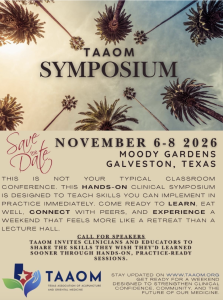
Link for more information for November Texas Symposium

Virginia

At our Annual Member’s Meeting in April 2026, Dr. Anthony Von der Muhll, DAOM, received the ASVA Member of the Year award and Dr. Jennifer Surjana, DACM, received the Board of Directors Member of the Year award for their invaluable contributions and dedication to the Acupuncture Society of Virginia and the Acupuncture profession at large. With half the Board of Directors turning over, we will be using the new energy, perspective, and experience to strengthen and expand the intraprofessional relationships between ASVA and the public, healthcare providers, schools, and policy makers, securing the future of Acupuncture in Virginia for sustainable growth and integration.
Legislation & Advocacy: Virginia will receive the report from the Health Insurance Reform Commission (HIRC) regarding legislation that would require Insurers in Virginia to cover Acupuncture by the end of the year. In the meantime, ASVA will be hiring a lobbyist and continues to engage in proactive legislation to uplift Acupuncturists in Virginia.
We are asking all members to reach out to their local legislators before the end of the summer and introduce themselves as a subject matter expert in Acupuncture so when legislators have questions about Acupuncture and/or Dry Needling, they turn to their local L.Ac.s for advice and input.
Wisconsin

The Wisconsin Society of Acupuncturists (WISCA) recently sent both primary and alternate delegates to the ASA Council Meeting to learn from successful advocacy and integration models across the country, exchange ideas, and explore potential resolutions for challenges facing our profession. One major focus was studying the successful acupuncture integration model at Allina Health in Minnesota and identifying strategies that may help expand acupuncture integration within the UW Health System in Wisconsin.
At the ASA Annual Meeting in Minneapolis last month, Wisconsin practitioners were also actively involved in educational presentations and discussions. Colleen Lewis from Madison was invited to instruct an Individualized Qigong Practice session. Professor Quanyuan Jin from Milwaukee was invited to present the seminar “Beyond the Needles: Moxibustion and Other Thermal Therapies for Refractory Pain,” and also participated in discussions regarding “The Evolution of Dry Needling in America.”


In addition, WISCA’s Education Committee will host a student seminar, “Exploration of Acupuncture Specialties,” on May 27 at 7:30 PM to help students better understand various career paths and specialty opportunities within the profession.
WISCA is also working to streamline its online membership renewal portal to improve accessibility and simplify the renewal process for members.
The Membership Committee continues focusing on member engagement and outreach to help Wisconsin acupuncturists better understand the importance of joining WISCA to protect, strengthen, and advance our profession in Wisconsin.